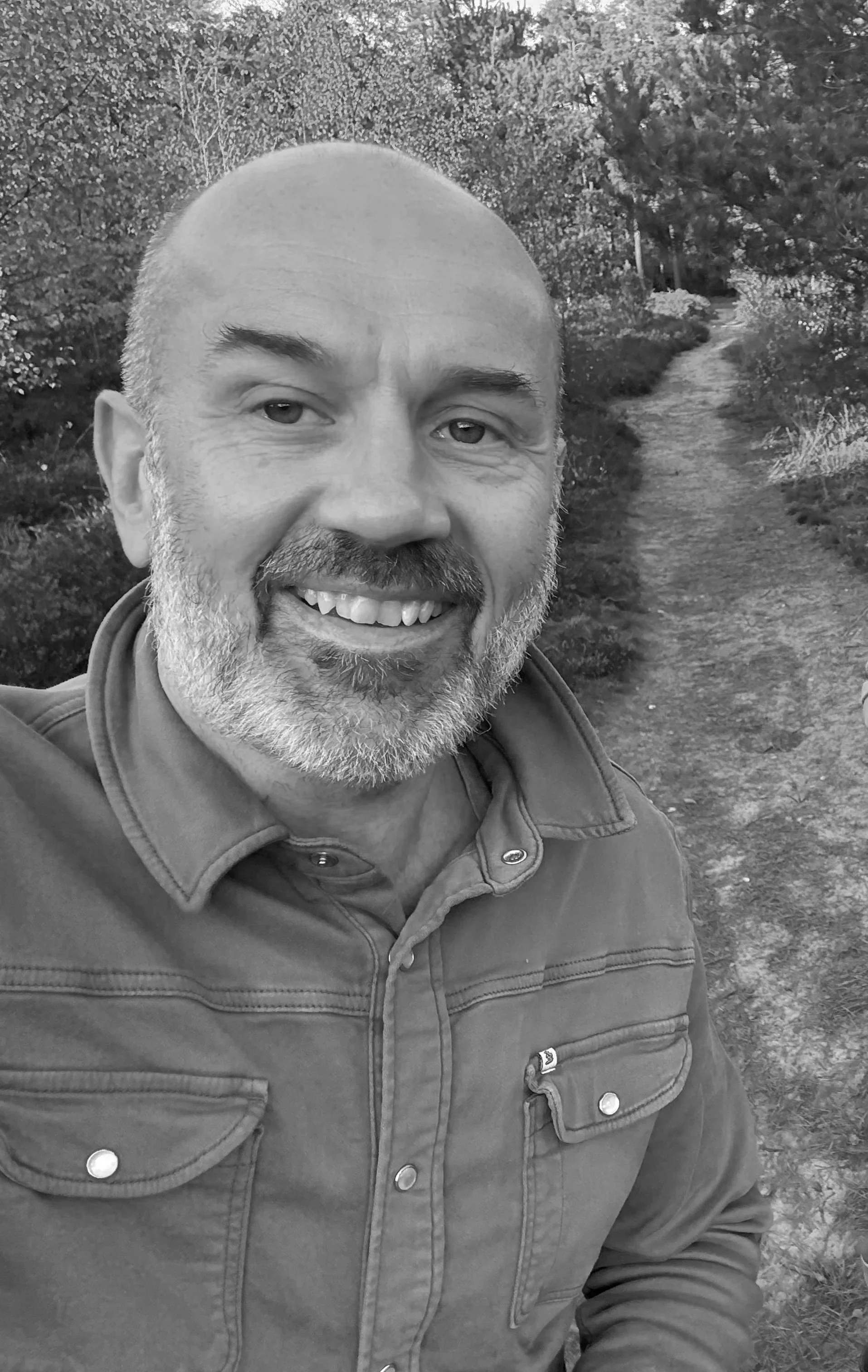
Meet Jon
My name is Jon Tidy. I am a psychological coach and trained Gestalt psychotherapist. My previous career was in finance, where I spent nearly three decades as a trader, broker, and manager, moving through New York, Tokyo and Singapore before eventually returning to London. I am in my fifties, a father of four, and I live in London.
For most of that career, by most visible measures, things went well. I learned a great deal about trading, leadership, and operating in highly competitive environments. I met good people, and for the most part I thrived.
Towards the end, however, something shifted. The culture I found myself in felt increasingly stifling. No longer satisfied by the pursuit of financial stability alone, and having stopped finding the work purposeful, I started to ask the kinds of questions that often surface at certain points in a life:
Is this all there is?
Who am I if I am not my work?
Eventually I decided to pivot fully and retrain. It was not an easy decision. It was a necessary one.
I began by training in Gestalt psychotherapy, a process that required being in therapy myself and engaging in demanding experiential group work. During that period I began to recognise how much of my working life, and my life more broadly, had been organised around patterns I hadn't examined. Despite a fortunate childhood, I had been beset by a persistent lack of self-worth, and had found effective ways to mask it. In the workplace this often meant conforming to competitive norms: bravado, posturing, shouting louder than the next person, and turning a blind eye to the bullying tendencies of others, and in doing so becoming complicit. I also had to admit that these adaptive traits came easily to me, which allowed me to maintain a convincing sense of competence and commitment long after I had mentally begun to move on. It was also where I came to understand the impact of my own shame process, and how shame, which most of us carry without knowing it, tends to surface precisely when we are under pressure or in conflict.
Becoming a coach was another stretch entirely, perhaps because it required relinquishing certain elements of my therapeutic orientation. The training was rigorous, and my understanding of the work evolved slowly. Over time it became clear that coaching is where I am most naturally suited, and where my background, in all its dimensions, is most fully put to use. I find it purposeful work, and it suits me.
This is where the journey has led so far. I no longer think in terms of arriving anywhere definitive. Instead, I try to orient myself towards alignment, returning to it deliberately whenever the pull of achievement and outcomes begins to take over again.
The patterns I learned to recognise in myself, and in the culture I worked within, are the same patterns I now help other leaders and teams recognise in theirs, whatever industry they're in.